
MATTHEW E. HENRY (MEH) / DILEMMA TALES
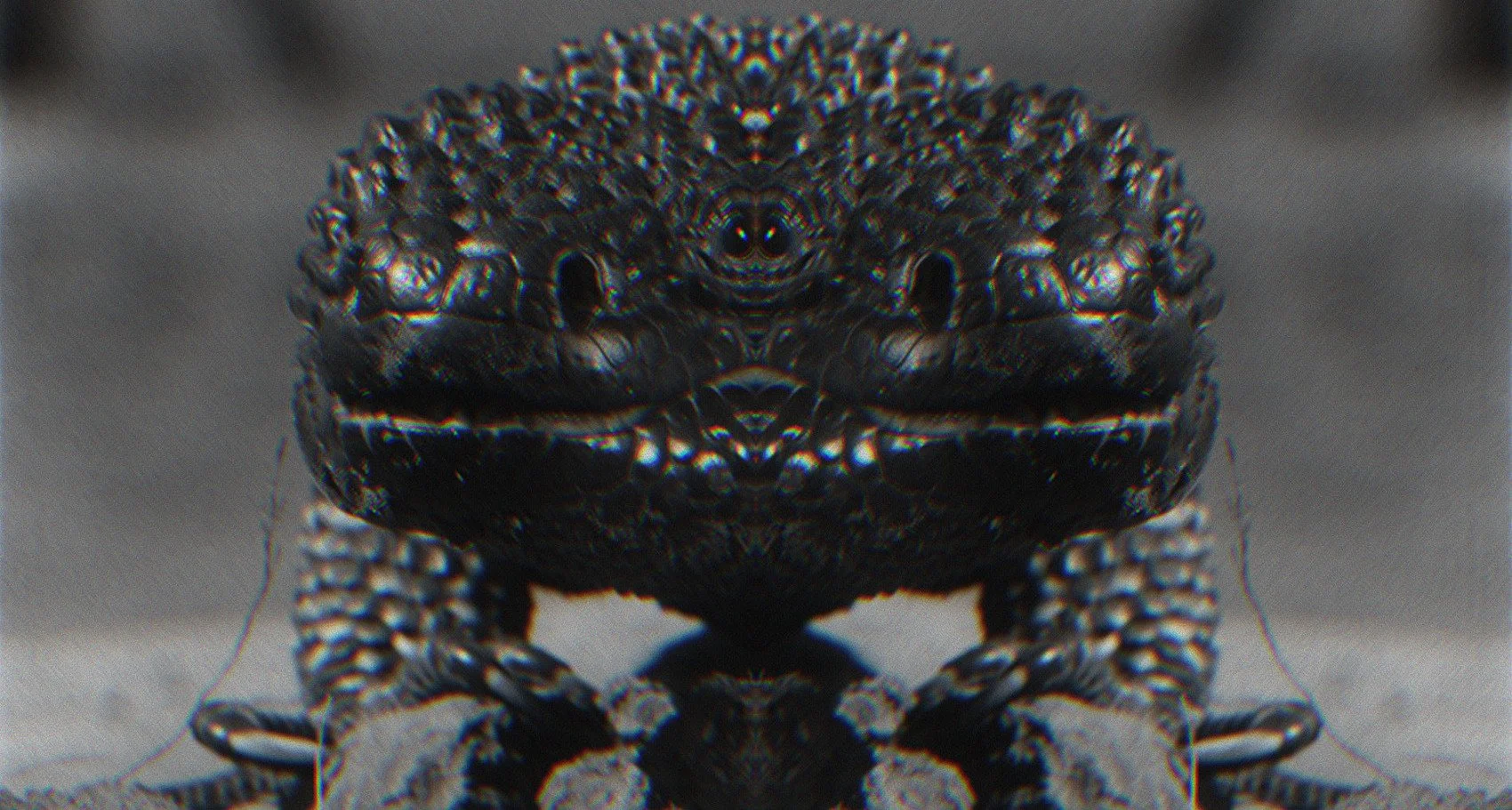
An old man had three boys who grew into men. When he was too old to provide for himself, he sent them out to bring him food and clothing. After the brothers traveled a very long distance, they arrived at a large river. On the other side of the river the road diverged in three directions. They decided to separate once they got across. The eldest told the youngest to take the middle road, the second to go to the right, while he himself would go to the left. They would meet back at this crossroad in a year’s time. As promised, each went down his path and, after a year, returned to the crossroad. When the eldest asked the youngest what he had gotten during his travels, the youngest replied, “I only have a mirror, but it has a wonderful power. If you look into it, you can see all over the country, no matter how far away.” When the eldest asked the middle bother what he had gotten, he replied, “I only have a pair of sandals, but they so full of power you can arrive at any place in the country in one step.” When asked what he had gotten, the eldest replied, “I only have a small vial of medicine. But let’s look into the mirror to see how our father is doing.” When the youngest took out the mirror they learned that their father had died and was buried. Then the eldest said, “Let us hurry home to see if there is anything we can do.” The middle brother put on his sandals, and when his brothers grabbed him tightly about his waist, they were immediately transported to their father’s resting place. When the eldest brother poured the contents of his vial over their father’s grave, their father arose as if nothing had been the matter with him.
Now, which of these three sons performed the best?
Things to Consider:
By what criteria are you judging the impact of the sons’ objects? Is that a fair assessment?
What was the father’s actual request of his sons?
Does resurrection improve poverty?
What does the acquisition of each object reveal about the selfishness of each son?
Replace “sons” with “daughters.” Would the story have progressed differently?
* * *
“Ha! We haven’t been happy in years, to say nothing of in love. At this point we’re, at best, decent roommates. Platonic and polite, at least in front of our kids. I don’t know: I keep asking myself if I should file the papers already or stick it out? Just keep pretending for the sake of the kids, at least until college. If I can hold on that long. Should I?”
A young man and woman fell in love and went into a secluded area of a park for privacy. He spread out a blanket and gently pulled her down to join him. Just as talking turned to touching, Iblis (the devil) suddenly appeared, grabbed the boy, killed him, and then cut off his head. It happened so fast, all the girl could do was scream. Meanwhile, both pairs of the young couple’s parents were searching for them. At the entrance to the park, they met an old woman who pointed them in the right direction. When they arrived at the spot, they found the headless boy and the blood-covered, still screaming girl. Before they could speak or scream themselves, Iblis materialized. Suddenly, he created a river of fire, and a river of water, and a river of black-hooded cobras, and beyond this last river he placed a giant lizard.
Iblis strutted up to the group—the girl’s mother and father, the boy’s mother and father, and the girl herself—and said to them, “Would you like me to help you bring this boy back to life?” “Of course!” they answered. “Very well,” he said, “You, the boy’s mother, must pass through the river of fire, and then through the river of water, and then through the river of cobras, grab the lizard and bring it back out to me.” But the boy’s mother answered, “No! The fire will consume me, the water will drown me, and the cobras will poison me!” Iblis said, “A pity. Had you done what I asked, I’d have helped you with your son.” The girl spoke up, “If the lizard is brought to you, he will come back to life?” “Yes,” said Iblis. The girl sprung to her feet and ran through the river of fire, then swam through the river of water, then pushed aside the slithering snakes until she seized the lizard around the neck. She struggled back through the three rivers and handed the lizard to Iblis. Immediately, the boy sat up alive, his head reattached. Iblis grabbed the boy by the shoulders and locked eyes with him saying, “If this lizard is killed, your mother will die, but if you do not kill it, the girl’s mother will die.”
What should the boy do: kill the lizard, which will kill his own mother, or let it live, which will kill the girl’s mother?
Things to Consider
This is an either/or proposition. Either the young man kills the lizard, or the young man does not kill the lizard. There is no trick. Stop looking for one.
How do you define “family” and what do we owe them?
How does your relationship with your own mother influence your thinking?
Which characters have you completely forgotten are present in this story?
If your significant other was in a terrible accident where they were paralyzed or horribly disfigured, would you stay with them?
* * *
“On the other hand, Thanksgiving is in a few weeks and the whole damn family will be at our house this year. I guess I could just rip the band-aid off after my pastor uncle gives his twenty minute prayer before we eat. Or maybe when we go around the table and share what we’re grateful for. Dear baby Jesus, this year I’m grateful that I have the courage to come out as one of “those gays” to my fundamentalist family. Amen. Please pass the stuffing, Aunt Rachel. I can always lock myself in my room if shit gets ugly. Of course it might instantly kill my grandma. But she won’t have time to change her will, so that’s a plus. I’m joking! Mostly. Ugh. What do you think I should do?”
There once was a man with three pregnant wives. Each was due around the same time and planned to give birth in their home villages. They asked their husband for permission to leave, and he agreed. On the appointed day, the four left together. At the place where the road branched in three directions, the man kissed each of his wives on the cheek saying, “I will leave you here to take your different roads home.” He turned to depart and suddenly fell dead.
The women did not know what to do. The first wife said she could not leave her husband and would follow him into the afterlife. She went and hanged herself on a tree beside the road. The second wife said she could not leave her husband's body for the vultures and hyenas to desecrate. She sat down by the corpse and kept the animals away with her a stick and hands. The third wife fled into the forest weeping but ran into a man who asked her what was wrong. When she explained, he told her that he could help. She led him back to the crossroads where he cut down the first wife and lay her beside the dead man. He then took out a magic cow’s tail and tapped both on the chest. Their eyes opened, fully healed.
Which of these wives is best?
Things to Consider
Did you misread the verb in the question above?
How much does your fear of death influence your answer?
What matters more to you: intent or impact?
How do you judge “love”?
Did you forget each woman is pregnant?
* * *
“If I take my fucking anxiety and depression meds, I’ll harm my baby. But if I don’t take the fucking meds, I won’t be able to fucking function and take care of this pregnancy. It’s a…what’s it called? A catch-22? Yeah. I’m in a real fucking catch-22. Sigh. The fuck should I do?”
Three women were walking beside a river when they noticed an infant struggling in the water. As the first woman rushed in to rescue the child, the second woman screamed—there was another baby floating down the river. As the first woman turned back toward the river, the third woman screamed. All three women paused at the horrific sight: every 15 yards or so another baby head was bobbing down the river. Some still feebly thrashing. Some still.
The first woman sprang back into action, grabbing a baby and bringing it to shore. But for every baby she deposited on the bank, another two or three drowned. Seeing this, the second woman immediately dropped to her knees and began to pray. She cried out to their God, begging and pleading for this tragedy to cease. The third woman turned away from the others and began rushing upstream. Upon seeing this, the first woman called after the third woman: “Where are you going?! Help us save these children!” The third woman gasped over her shoulder, “I am heading upriver to stop whoever is throwing these babies in the water!”
Now, which of these women did best?
Things to Consider
[If you believe in a higher power/”God”] What does it say about you that you sneered at the second woman?
[If you don’t believe in a higher power/”God”] Why is humanity so fucked up?
[If you are reading this tale as a metaphor] what problem are you failing to address in your own life?
Do your choices really matter? Why even bother?
Have you considered that there might be a good reason that those babies are being tossed into the water?
* * *
“Should I go to the funeral home to wash and dress my boy one last time, or let a stranger do it? I don’t think I can handle it, but I don’t want my last memory to be finding him blue in his crib. What do I do?”
My ex-wife once brilliantly paraphrased a section of T.S. Eliot’s Four Quartets: “fuck hope, yet hope still remains.” Some would argue that all the tales above are examples of this principle. Others would violently disagree.
Who is correct?
Things to Consider
Which of the characters in the above stories best represents your actions and motivations?
Why? / Why not?
Could you do better?
Are you doing better?
Why? / Why not?
How?
When?
Now?
Note: Dilemma tales provoke discussion and clarify the ethical identity of a society as its core beliefs are put in tension. Three African dilemma tales—“Wonderous Powers: Mirror, Sandals, and a Medicine Bag” (Togo), “The Devil Comes Between Them” (Hausa), and “Three Wives” (Dagomba)—are adapted from Roger D. Abrahams’ African Folktales: Traditional Stories of the Black World. The fourth story was first relayed to me orally. Multiple versions exist online and the original source is debated.
Matthew E. Henry (MEH) is an educator, essayist, occasional fiction writer, and author of seven poetry collections, most recently Promises to Keep (Wayfarer Books, 2026). Editor-in-chief of The Weight Journal, a poetry editor at American Poetry Journal, and nonfiction editor at Porcupine Literary, MEH’s publications include Barren Magazine, Had, Massachusetts Review, Pedestal Magazine, Mayday, Ploughshares, Southern Humanities Review, Terrain, and The Worcester Review. MEH earned an MFA yet continued to spend money he didn’t have completing an MA in theology and a PhD in education. He writes about education, race, religion, and burning oppressive systems to the ground at www.MEHPoeting.com.