
SEÁN PADRAIC BIRNIE / 2 STORIES
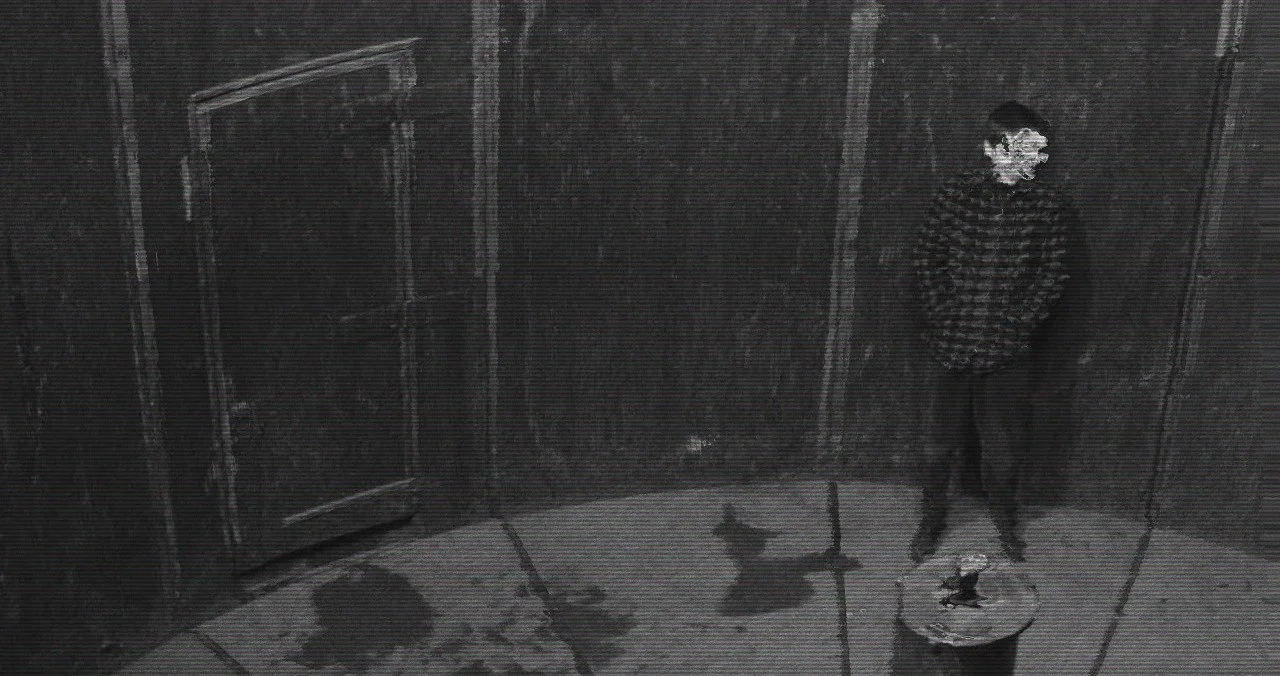
Pivot
I did not mean to hit the child, but in standing, turning, swinging my arm, my hand, my fingers with long fingernails, it appeared that I swung that arm and hand intentionally, so as to hit the child, a boy of nine or ten. In appearing as if I had meant to hit this child, the idea that I had meant it, this act of violence, seemingly no accident, became at once a firm belief lodged in the minds of the witnesses, the onlookers who at once became witnesses, confirmed in their conviction by the cry of the child. That anguished cry was undeniable: who could deny it?
On the heels of the cry there followed a series of first murmured, then spoken, then shouted expresssions of outrage at the hitting of the child. The logic of this sequence thusly established, every subsequent action, as a link in that chain, bore out that truth, which was not the truth at all: that I, callous and so tall, a stranger among these families gathered here to enjoy the cold January sunshine, the pebble beach, buns and baps of mackerel and crabmeat from the little shack, and the coffee it served, had quite deliberately hit the child.
(All this on the turn of a penny. I know now that a life may change in an instant.)
My attempt at apology and explanation conferred further evidence of guilt. The child, turning, looking up, for he still had not gotten back to his feet, raised an arm, a hand, a finger, pointing. To be so accused is to be condemned. His cheeks postbox-red, his eyes running with tears and his nose with snot, the boy’s pink finger, hanging in the air as if separated from his body, became the pivot around which this January scene, a cold day though sunny, the sea so flat and so still, the gathered families, a violent stranger, so clumsy and so tall, would turn.
Under the force of that belief, I felt a double guilt: that I had, quite by accident, caught a child with my hand, in standing, turning, swinging my arm, and had thereby caused some minor injury, a terrible thing on its own merits; and that I had also struck the child with cruel intent.
In that moment now all commotion ceased, all accusation and apology. The day braced itself. The wind held its breath. A red parasol, blocking the sun, cast the child’s face in partial shadow. Did he smile up at me? Sometimes it is hard to see through the grid, the film, of what one thinks one sees. Flushed with power, I think the child smiled. I think the familes smiled, in relief, or with a kind of joy. In the silence of the stillled waves, I stared at the pink tip of the child’s finger, still pointing: he is pointing still.
Jinx
It is known that if by chance you jinx yourself, you may unjinx yourself by applying a second jinx on top of the first. In implementing this technique, it is vitally important that you apply the correct type of jinx, in the correct manner. It is is a delicate process: accuracy at every step along the way is essential. Of course, one must always proceed cautiously in matters concerning jinxes, and most cautiously of all, perhaps, when deploying a reversal jinx. There are exactly as many reversal jinxes as there are initial jinxes that might be reversed: indeed, the former is the logical corollary of the latter, is in a sense its negative complement. A reversal jinx is therefore very similar in form and content to the jinx it reverses, and to the inexperienced it may appear identical. It is not. The danger resides precisely here, because if an initiator attempts to reverse an initial jinx but succeeds only in repeating it, they will effect what is called an intensification jinx, with diabolical consequences. An intensification jinx operates on an exponential basis, and in its interaction with the initial, or primary, jinx, the faulty reversal acquires, by means only dimly understood, a certain autonomous force, which is to say that the interaction enables it to repeat itself without prompting from the initiator. I trust you see the danger here. If you consider the initial jinx a terrible burden, one you would give just about anything to escape, try to imagine the terrors of life under the spell of an intensification jinx. The usual warnings concerning the stacking of jinxes also apply, because the more jinxes one stacks atop another, the more unintended consequences may result, consequences that themselves may interact in entirely unpredictable ways. Of course, one might apply a reversal to an intensification jinx, but such a feat has never, so far as we know, been attempted. Such a procedure could conceivably unleash quite unspeakable horrors.
Until recently, it was believed that a reversal jinx was the only possible means by which an intensification jinx could be undone, but news has reached me of an alternative method. This involves the use of prime numbers, and prime numbers, as we know, possess especial power. It is assumed that each prime number deployed in this manner will produce a different effect: the use of 31, for example, might yield radically different outcomes to the use of 29, or 37, or 41, alongside the target outcome for which it is deployed – the reversal of the intensification jinx. A prime-reversal is a species of repetition jinx, a genus with which all practiced in this science will be familiar. In essence, this novel prime-reversal repetition jinx involves the controlled repetition of a given keyword a set amount of times, the amount of times in question determined by the particular prime number chosen for the task. But to call this type of jinx a reversal jinx is inaccurate, for in actuality it does not so much reverse the jinx as unlock it. Unlocked, the jinx is rendered transferable. Naturally, this requires a destination, or target, onto which the jinx can be transferred – an unfortunate drawback. What, you might ask, is the destination/target? Well, it ought to be obvious by now.
It is not a question of what, but of who. It would be inexact to say that I am sorry about this, because I am not. No, I am not sorry at all: I am relieved.
Seán Padraic Birnie is a writer and photographer from Brighton, England. His debut collection of short stories, I Would Haunt You If I Could, was published by Undertow Publications in 2021. His work has appeared in Best British Short Stories, Interzone, ergot., and Cōnfingō, among other places. He is on Bluesky and Instagram @seanbirnie. For more information, see seanbirnie.com.